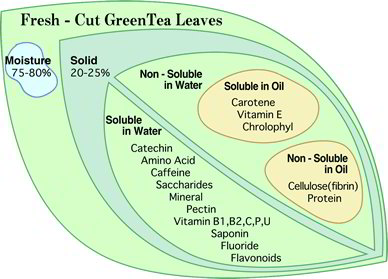
Catechin (see other page): Catechin is a tannin
peculiar to green tea because the black tea fermentation process reduces catechins
in black tea. Catechin is a powerful, water soluable polyphenol and antioxidant
that is easily oxidized. Several thousand types are available in the plant world.
As many as two thousand are known to have a flavon structure and are called flavonoids.
Catechin is one of them.
Vitamin A - Carotene: Several types of carotene exist in tea leaves and ß-carotene is the most prevalent (22mg%). ß-Carotene converts to Vitamin A once absorbed in the body. Carotene content is high in quality teas.
Vitamin B1 - Thiamine: This vitamin is necessary for proper metabolism of sugar, particularly essential for Asians, whose primary nutrition comes from rice.
Vitamin B2 - Riboflavin: Necessary for red blood cell formation, antibody production, and cell respiration and growth. This vitamin also helps tissues of the skin, hair, nails, and hair utilize oxygen more efficiently.
Vitamin B3 - Niacin: Important for the release of energy from carbohydrates and fats, the metabolism of proteins, making certain hormones, and assisting in the formation of red blood cells. It also imrpoves the blood cholesterol profile.
Vitamin C: Necessary for collagen growth, the substance that connectscells. Fermented teas (black, oolong tea) contain far less because vitamin C dissolves in the fermentation process.
Vitamin E - Tocopherol: This vitamin is an antioxidant known as a tocopherol. Green teas grown in non-shaded environments contain more Vitamin E than teas grown in shaded environments.
Vitamin F - Flourine: Particularly abundant in the Camellia family of plants. Green tea contains 40-1900 ppm (parts per million) of fluorin. Mature leaves contain more fluorine than young buds.
Vitamin P - Flavonoids: A type of flavonoid known as rutin. The amount of Vitamin P in spring for first flush tea is lower 340mg per 100g while the summer tea content is higher 415mg per 100g.
Vitamin U: In higher quality teas, when dissolved, this vitamin generates a peculiar aroma like dried seaweed.
Chlorophyll: Plays a vital role in photosynthesis. Its molecular structure is similar to hemoglobin contained in human red blood cells. If green tea is grown with a covering over it, chlorophyll tends to increase as the tea leaves attempt to absorb as much light as possible.
Minerals: Green tea contains 5-7% minerals (ash content). Major types of minerals are kalium, calcium, phosphorus, manganese, zinc, and copper. Zinc and copper are necessary elements in the formation of antioxidants.
Pectin: A natural food fiber. The content level in green tea is not high, but it gives stickiness to the liquid and adds body to brewed tea.
Saccharides: Tea leaves photosynthesize and produce glucose, which converts to starch and provides cellulose leaf structure. These substances are called saccharides. The amount of saccharides is lower in young buds that have not yet photosynthesized, but increase as tea leaves mature. High-end teas contain fewer saccharides than low-end. Cellulose does notdissolve in water and has no effect on tea taste. Glucose, fructose, and sucrose do dissolve in water but their content in tea liquor is extremely low.
Saponin: The component that causes the formation of bubbles in teas such as Matcha. Research indicates the following effects: anti-mold, anti-inflammation, anti-allergy, anti-hypertension, and anti-obesity.
Amino Acid Theanine: There are about 20 different types of amino acids in tea. More than 60% of these amino acids consist of theanine, which is unique to green tea because the steaming process does not eliminate it. Theanine has a similar structure to glutamine providing an elegant taste and sweetness in green tea. L-theanine is a healthy amino acid that is only found in tea plants and certain mushrooms.
Amino Butyric Acid: (GABA) is produced if tealeaves are left without oxygen. Regular crude tea processing produces a tea with GABA.
Caffeine: A cup of green tea contains about 15 to 30 mg of caffeine, a stimulant affecting the central nervous system. It is an important quality in green tea providing bitterness. Summer crops have a little more caffeine in them but not enough to make a significant difference. Similar to catechin and amino acid, young tea buds contain higher amounts of caffeine than mature buds.